How should a band plan a recording session?
Recording is fun and exciting, and it is even more fun when you have prepared: what to decide before the first day, what to tell the studio, and how to plan the day itself.
Plan a recording session by settling the songs before you book: arrangements, tempos, keys, intros, endings and solos. Record a rehearsal and listen back, send the studio your lineup, song list and any demos ahead of time, and plan the day so drums and the band go first and vocals happen while the singer is fresh.
Why plan a recording session if recording is supposed to be fun?
Recording is fun and exciting. It is even more fun when you have prepared properly, because the hours go into playing instead of deciding. A band that walks in knowing its songs gets to chase the good take. A band that walks in still arguing about the bridge spends the day rehearsing with the meter running.
The studio policies page puts it plainly: studio time spent deciding how a song ends is the most expensive rehearsal a band will ever book. Unless you have worked through pre-production with a producer, 512 Studios assumes the band is well rehearsed on every song, with solos, intros and endings planned beforehand. Rehearsal time in the room is charged on top.
None of that means the record has to be locked before you arrive. Good ideas still turn up in the room. Planning just makes sure they are ideas, not emergencies.
What should a band decide before the first day in the studio?
Decide what you are making and which songs are on it. A single, an EP and an album are different amounts of work, and knowing which one you are booking for is the first thing the studio will ask.
Then settle each song: the arrangement from count-in to the last hit, the tempo, the key, who plays what, and how it starts and ends. Write the tempos down. Songs drift faster in rehearsal, and the click, or the drummer's count, should match the version you love rather than the version you played last Tuesday.
Put the songs in order of importance. If the day runs long, you want the song that matters most to be finished, not the one that happened to be first on the list.
Should we record our rehearsals before going into the studio?
Yes. A phone in the middle of the rehearsal room is enough. Listening back is the fastest way to hear that two guitars are playing the same part, that the second verse has no reason to exist, or that the singer is fighting the key.
Those recordings also help the studio. A rough demo tells the engineer what the band sounds like, how loud it plays and what the songs need before anyone has unpacked. Add one or two reference songs by other artists that sound the way you want your record to feel.
What should we tell the studio before the session?
Most of the setup can happen before you arrive if the studio knows what is coming. Send it when you book or in the week before.
- The lineup: who is playing, on which instruments, and who is singing.
- The song list, how many songs you hope to finish, and the demos and references.
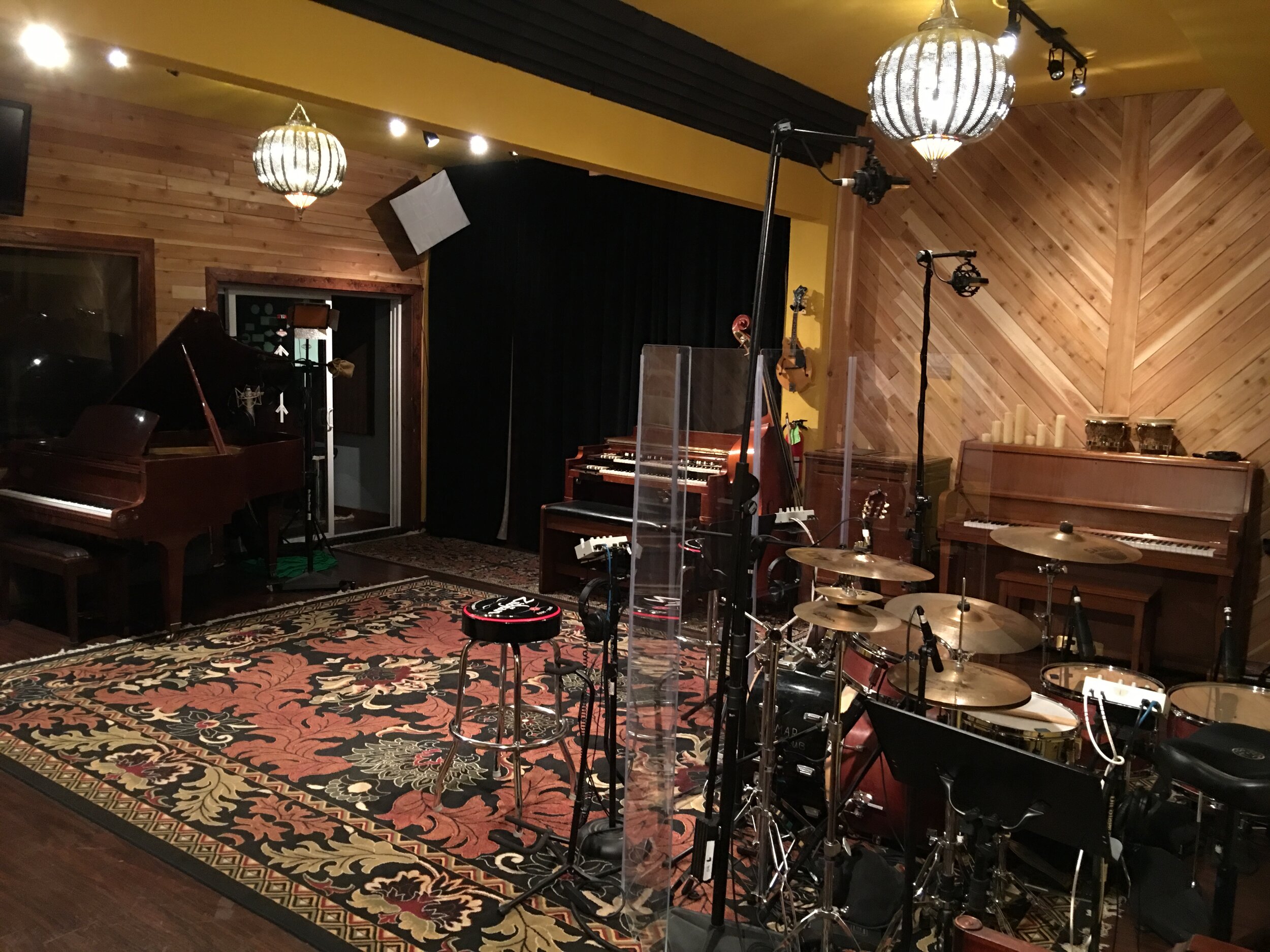
- What gear you are bringing and what you would like to use from the studio. 512 Studios has a house drum kit already mic'd in the live room and a number of guitar amps; call (512) 522-0359 to ask what is available.
- Anything unusual: strings, horns, a choir, a part played on an instrument the studio does not have. If your record needs something that is not in the building, say so on the booking call.
- What you want to leave with: rough mixes, finished mixes, masters, and the format of the session files.
How should we plan the recording day itself?
Plan to finish fewer songs than you think. The first hour goes on setup, headphone mixes and getting comfortable, and the first take is usually a warm-up whatever anybody says.
Track the foundation first. Drums and the band go down together or in the order the engineer suggests, then overdubs, then lead vocals. Many singers sing a guide vocal with the band and come back for the keeper later in the day or on another day, while their voice is fresh.
Schedule breaks and real food. Tired players speed up, singers go flat late in the day, and ears that have been listening all day stop hearing clearly. A short break often fixes a take that ten more attempts would not.
What should we bring on the day?
Put new strings on a day or two before so they have time to settle, and bring spares. Drummers bringing their own kit should fit new heads in advance and play them in. Pack sticks, picks, capos, tuners, the cables you rely on, and printed lyric sheets and chord charts for anyone who might need them.
Bring water, something to eat, and a drive or a plan for receiving your files. Most of all, bring the version of the band that played the songs well in rehearsal.
Quick answers
How many songs can a band record in one day?
It depends on the songs, the band and how much of each song is overdubbed. Tell the studio how many you hope to finish and let the engineer help you set a realistic number before the day.
Do we need a producer for pre-production?
No, but it helps when the arrangements are not settled. If you want help shaping the songs before you record, ask about pre-production when you book.
What if the songs are not ready by the session date?
Move the date rather than rehearse on the clock. At 512 Studios a hold is refundable with at least a week's notice, so decide early.
Further reading
Want to hear it in the room? Call (512) 522-0359 and tell us about the record, or book time.
More notes
Should you bring your own drums and amps to a recording session?
What it costs to load in and tune a drum kit in the studio, what the house kit and amps at 512 Studios save you, and when it is still worth bringing your own.
What is good studio etiquette during a recording session?
How to behave in a recording studio so the session goes well: when to arrive, who calls the takes, phones, guests, the gear, and how to leave the room.
How many takes does a singer need to record vocals?
Omar Vallejo on takes, punch-ins, comping and headphone mixes, for singers getting ready to record vocals at 512 Studios in Austin.