Should a band record an album live together or one instrument at a time?
How to set up a live band recording: who goes in the isolation booths, what to do about bleed, how the headphone mixes work, and which parts still get overdubbed.
If your band plays the songs well as a unit, record the album live together, because a live take keeps the feel between players that recording one instrument at a time tends to lose. Put the loudest amps in isolation booths, give every player their own headphone mix, and overdub only the parts that need their own space, such as lead vocals and solos.
Should our band record live together or one instrument at a time?
A band that plays its songs well together should record them live together. A live take catches what players do in response to each other: the drummer pushing into a chorus because the guitarist did, the bass settling onto the kick drum. Recording one instrument at a time gives you more control over each part, and most bands lose some of that interplay in exchange.
At 512 Studios we track bands together on the floor, and the live room is built for it. Playing live doesn't mean every note has to survive from one take. I'd rather get the drums, bass and rhythm parts down together, then fix or add what needs it afterward.
Building a song one part at a time, called overdubbing, still suits some records. It fits songs written in layers, parts the band has never played as a group, and players who do their best work alone. Decide which kind of record you are making before the session starts.
Where does everyone stand when a band records live in a studio?
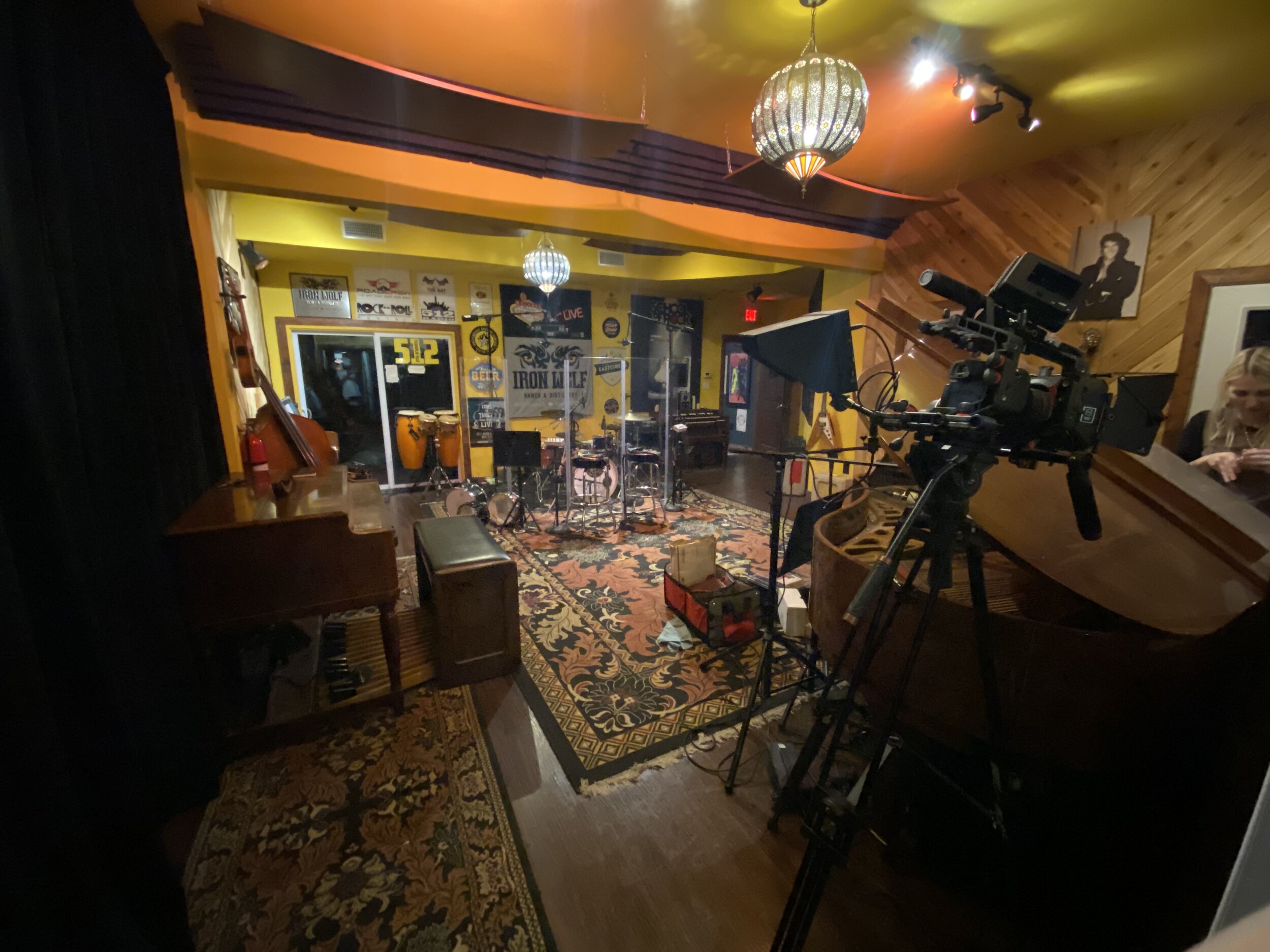
In a live band recording the drums usually take the open floor, because a kit sounds bigger with space around it. The other players set up around the kit, close enough to play as a band and placed so their microphones hear as little drum as possible. The live room at 512 Studios is 22 feet by 22 feet, with four isolation booths around it.
An isolation booth is a small room closed off from the main one. Booths are for sources that are loud, like a guitar amp turned up to where it sounds right, and for anything you might want to replace later, like a guide vocal. The guitarist doesn't have to go into the booth with the amp. The player can stay on the floor with the band, cabled to the amp, and hear it in headphones.
Players who stay on the floor are turned so the backs of their microphones face the drums, because most studio microphones pick up much less from behind than from the front. A figure-8 ribbon microphone such as the Royer R-121 hears front and back but very little from the sides, so it gets angled with the drums off to one side.
Is bleed a problem when a band records live?
Bleed, also called spill, is one instrument leaking into another instrument's microphone, and in a live band recording it is only sometimes a problem. Drums leaking into the guitar microphone can make a take sound more like a band in a room. It becomes a problem when you want to change one part, because replacing a vocal that picked up the snare also changes the snare.
Distance does most of the work. A microphone close to its own source and far from everything else hears mostly what it is there for. Sound On Sound's guide to recording loud bands gives a rule of thumb: keep microphones at least five times farther from each other than each one is from its own source. Treat that as a place to start, then listen and move things.
Two more habits help. Record bass through a direct box as well as a microphone on the amp. A direct box, or DI, takes the signal straight from the instrument, so that track has no bleed at all. And tune between takes, because an out-of-tune guitar also ends up in the drum microphones, where nobody can fix it on its own.
How do headphone mixes work when the whole band records at once?
When a band records live, each player wears headphones and hears a cue mix: a blend of the band made for playing to, separate from the mix that becomes the record. 512 Studios has 8-channel headphone monitoring, so every player can have their own mix. The drummer can have more bass while the singer gets more of their own voice.
A headphone mix you can't play to leads to stiff takes, and it is one of the easiest things in a session to fix. Speak up early.
- Start from a full band mix, then ask for more of whatever you lock to. For many drummers that is the bass, and for many bass players it is the kick drum.
- Keep the level lower than feels natural. Loud headphones tire your ears and can leak into nearby microphones, which matters most for a singer.
- Say something between takes if a part drops out, distorts or sits too loud. Nobody hears your headphones except you.
When should a band overdub parts instead of playing them live?
Overdubbing means recording a part on its own, on top of tracks already recorded. It is the right call for a part that needs a different sound, a quiet room or more attempts than the band can give together. Lead vocals are the common case. Many singers sing a guide vocal with the band and record the keeper afterward, when they can focus on the voice alone. Solos, harmonies and extra layers usually go on after the band tracks.
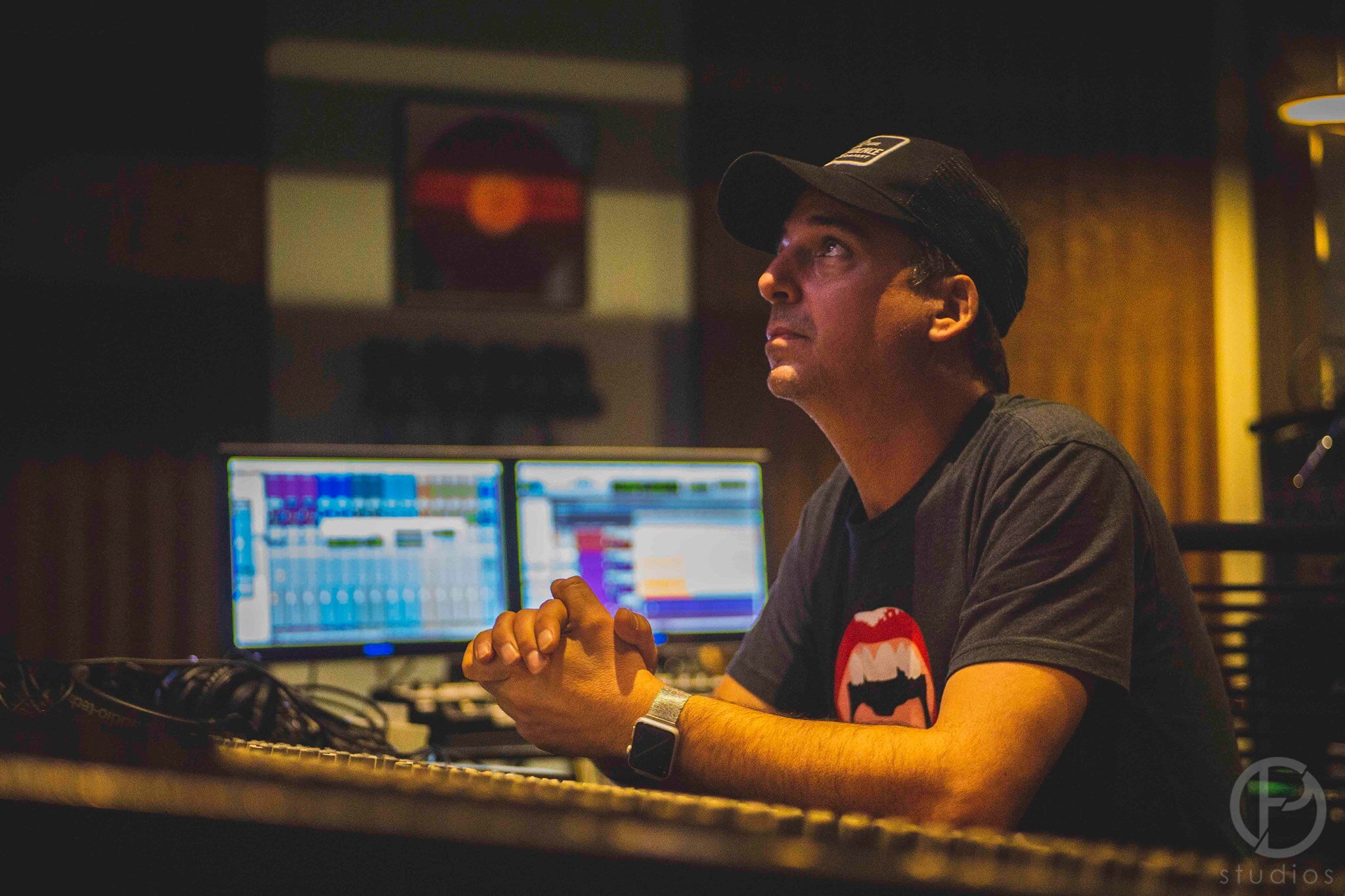
At 512 Studios, Pro Tools runs alongside the analog console: everything is tracked through the console and captured digitally for editing. That makes it simple to re-record one bad bar, called a punch-in, instead of the whole take, as long as bleed doesn't tie that part to the rest.
Sound On Sound's session notes on recording a live band make a point worth keeping: after a good live session, resist the urge to redo everything. Replacing parts one by one can cost you the feel you came in for without making the song any better.
Quick answers
Do we have to play to a click track when we record live?
No. A click keeps the tempo steady and makes it easier to edit between takes, but some bands play better without one. Try your songs both ways in rehearsal before the session.
Can the singer sing while the band records?
Yes. Singing along keeps everyone in the right place in the song, and a singer in an isolation booth keeps most of the drums out of the vocal. You can keep that vocal or sing it again afterward.
How should a band get ready to record live?
Rehearse the songs exactly as you plan to record them, with the arrangement and tempos settled. Put on new strings and drum heads a day or two ahead so they have time to settle.
Further reading
Want to hear it in the room? Call (512) 522-0359 and tell us about the record, or book time.
More notes
What does analog tracking through a console change for a band?
Recording through a large analog console into Pro Tools moves the big sound decisions to the moment the band is playing, and here is what that means for your session.
How many takes does a singer need to record vocals?
Omar Vallejo on takes, punch-ins, comping and headphone mixes, for singers getting ready to record vocals at 512 Studios in Austin.