What does analog tracking through a console change for a band?
Recording through a large analog console into Pro Tools moves the big sound decisions to the moment the band is playing, and here is what that means for your session.
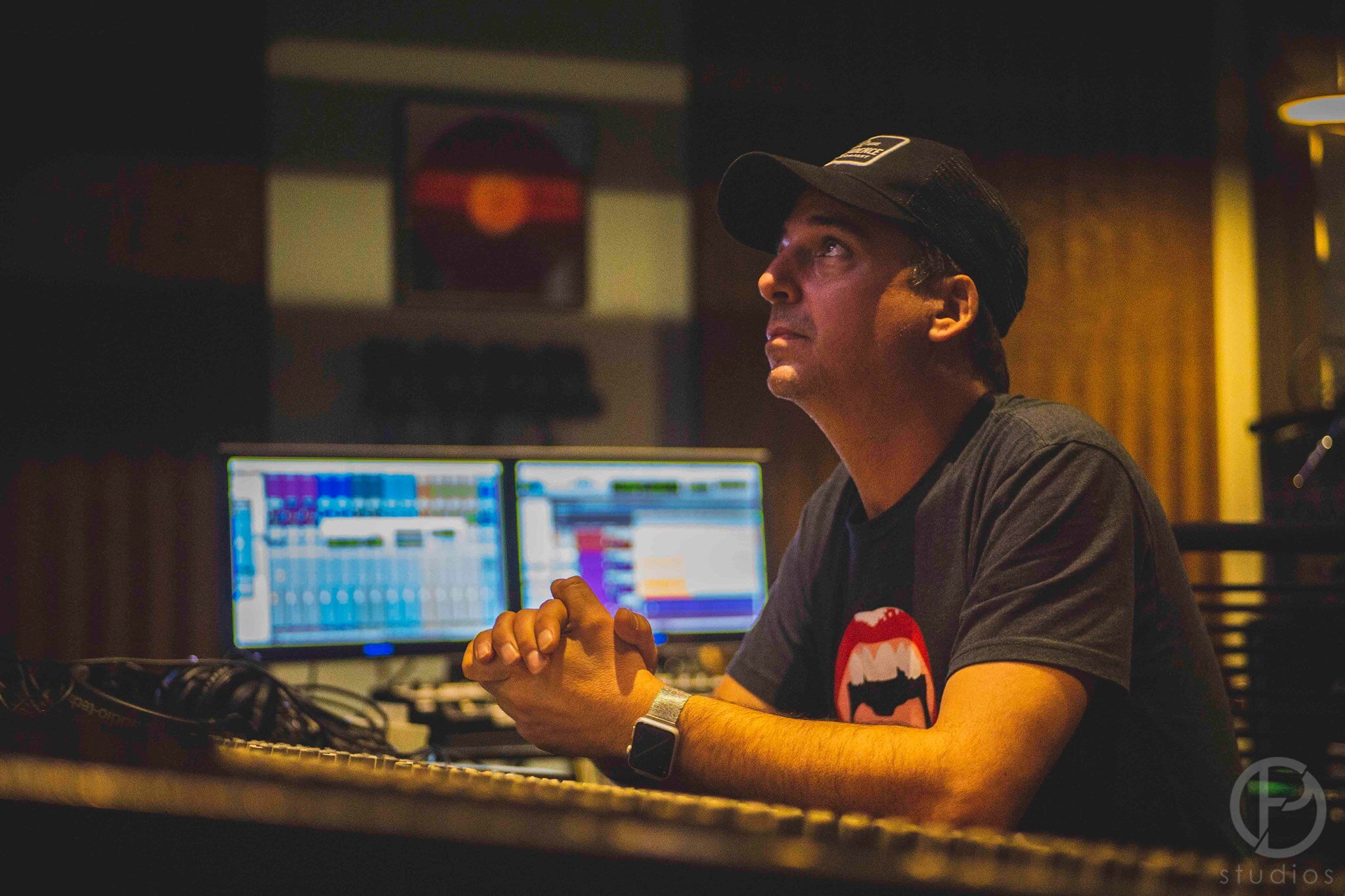
Analog tracking through a console means each instrument's level, tone and balance get set on the way in, while the band is still in the room to hear them. At 512 Studios, bands track live together on the floor through a 54-channel analog console, and Pro Tools captures the result for editing, recall and delivery. You leave with tracks whose basic sounds are already decided, instead of raw files that still need every call made later.
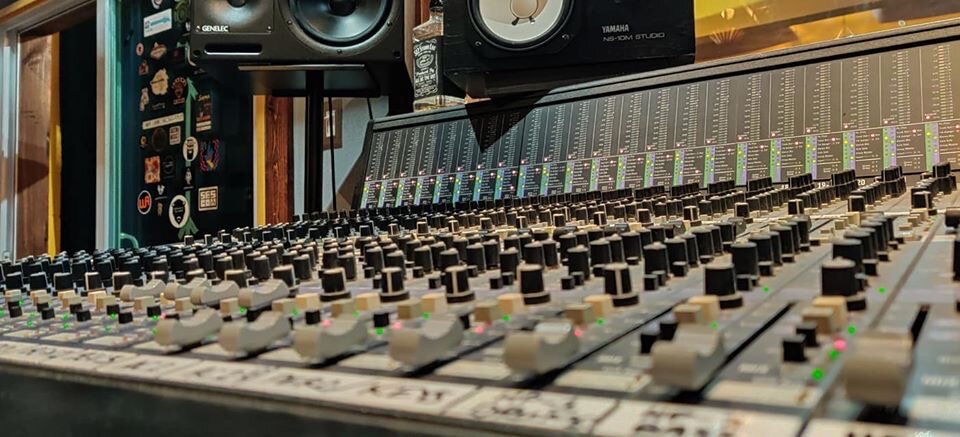
What changes when a band records through an analog console instead of straight into an interface?
Recording through an analog console moves the sound decisions to the moment of recording. When a band plugs straight into an audio interface, each mic usually goes in plain, and tone and balance get worked out later on a computer. On a console, every mic runs through its own channel with hands-on controls for level and tone, so the engineer shapes each instrument while the band plays and listens back.
At 512 Studios the console is a 54-channel analog desk with Pro Tools running alongside it. The band is tracked through the console and captured digitally. There is no tape machine at 512; the analog part of the recording path is the console itself.
What is gain staging, in plain terms?
Gain staging means setting how loud each signal is at every point it passes through, starting with the microphone preamp, the first control a mic signal meets on its way in. Set the gain too low and the quiet parts sit close to background hiss, which gets louder when the track is turned up later. Set it too high and the loudest hits distort, and distortion recorded into a take can't be removed afterwards.
On a console, the engineer sets that first gain control on each channel while watching the meter and listening to the band play its loudest part. In Pro Tools, zero at the top of the meter is a hard ceiling. Sonarworks' gain staging guide suggests peaks around minus 10 on that scale, or lower if the performance is unpredictable. Treat that as a starting point. Drummers almost always hit harder on the real take than at soundcheck.
Levels are only as good as what the band plays while they are being set. The soundcheck is where musicians help most.
- Play the loudest part of the song during soundcheck, not a gentle warm-up. A level set on a quiet groove can clip on the chorus.
- Use the exact amp and pedal settings you plan to use on the take. Turning an amp up after levels are set changes the gain on that channel.
- Singers: sing at full performance volume, standing where you will stand for the take.
- Tell the engineer about big jumps, like a whispered verse going into a shouted chorus, so the level can cover both.
Why get the sound right before it's recorded instead of fixing it in the mix?
Getting the sound right before recording means each instrument's tone is chosen while the player is still in the room to hear it and change it. If a snare rings too long or a guitar is too bright, the fix at the source might be a retune, a different amp setting or a mic moved a few inches. Once it's recorded, the same problem can only be patched with processing, and the band spends the session hearing it.
A console makes those source decisions practical, because each channel's EQ (its tone controls) shapes the sound as it goes to the recorder, and the engineer can build a working balance the band hears while they play. SonicScoop's guide to tracking bands live argues for printing essential EQ and compression on the way in, so musicians perform to the sound the record will have. I'd rather make those calls with the band listening than leave a pile of maybes for the mix.
There's a trade-off. EQ recorded into a track is committed. A sensible starting point is to fix what is plainly wrong, like mud or harshness, and leave the final polish for mixing.
Why does a 54-channel console matter when the whole band records at once?
A band tracking live together needs a separate input for every mic and every direct-plugged instrument at the same moment, and a fully miked drum kit can use ten or more on its own. Sound on Sound's session notes on recording a four-piece band live describe roughly ten to twelve mic channels for that one session. Plenty of desktop audio interfaces have eight mic inputs or fewer, which pushes a band toward splitting up or leaving mics out.
At 512 Studios, bands are tracked live together on the floor, in a room built for it. The 54-channel console has room for full drum miking plus bass, guitars, keys and vocals on their own channels at the same time, so the setup follows the band instead of the input count.
What happens in Pro Tools after analog tracking?
After analog tracking, Pro Tools is where the recorded takes get edited, recalled and delivered. Editing means picking the best take, combining the strongest parts of several takes and tightening small timing slips. Recall means the session can be reopened exactly as it was left, including every sound shaped on the console on the way in, because those sounds are now part of the recording.
Delivery means handing over files in the form the next stage needs. At 512 Studios, recording, mixing and mastering happen in house with the same producer, so the tracks go from the tracking session to the mix without changing hands.
Quick answers
Is analog tracking the same thing as console mixing?
No. Analog tracking is about how each sound gets recorded, and console mixing is about how the finished tracks get combined. A record can be tracked through a console and mixed in more than one way.
Does 512 Studios record to tape?
No. 512 Studios has no tape machine. The analog part of the recording path is the 54-channel console, and the recording is captured in Pro Tools.
Can we still fix mistakes after tracking live through a console?
Yes. The takes land in Pro Tools, so parts can be edited and a player can usually redo a section. When everyone plays in one room, other instruments bleed into each mic, which can limit how cleanly a single part gets replaced, so it is worth talking through before the session.
Further reading
Want to hear it in the room? Call (512) 522-0359 and tell us about the record, or book time.
More notes
Should a band record an album live together or one instrument at a time?
How to set up a live band recording: who goes in the isolation booths, what to do about bleed, how the headphone mixes work, and which parts still get overdubbed.
How many takes does a singer need to record vocals?
Omar Vallejo on takes, punch-ins, comping and headphone mixes, for singers getting ready to record vocals at 512 Studios in Austin.